Imagining the Geography of Software
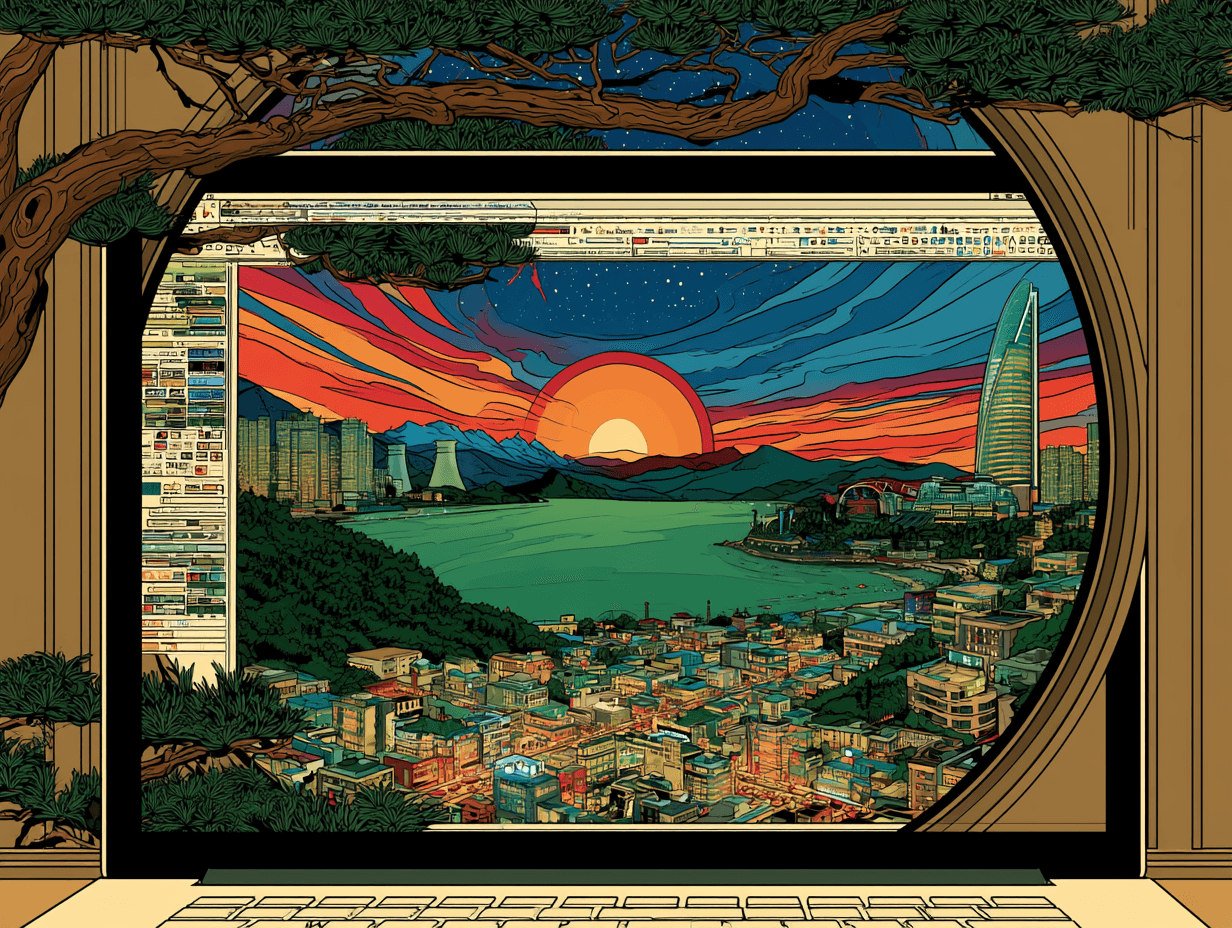
I’ve noticed that the dimension of space has certain emergent properties. Humanity has spent thousands of years learning to utilize them in the physical world.
Cyberspace inherently has the same properties, but we have yet to take advantage of them.
The Properties of Space
Containment. Space is a container filled with information. In physical space that information is matter: every object, person, and place occupies a position, and to exist is to be located somewhere within space. In virtual space, that information takes the form of bits.
Boundary. Let it be clear that a boundary is a mental construct. A sentient mind classifies one region as distinct from another and draws a line between them. That line exists only in thought. Still, it distorts how we perceive the space, and thus the space itself. The mind reshapes the world it inhabits.
Place. Draw a boundary that fully encloses a subset of the container, and you establish a place: a region of space treated as a single object. A place has a unique identity. It is a thing, a labeled container. It can hold anything: a single bit, a folder, an entire world.
Distance. The separation between two places. Traversing it takes time and energy proportional to the gap. Distance can be harnessed. We place what we want to avoid far away, so reaching it takes deliberate effort, and keep close what we want to live among, so interaction is effortless.
Paths. Between any two places there are many paths, both linear and nonlinear. We can choose which to take, and we can create new paths or reshape the ones that already exist.
If the Internet Were Physical
You spawn in a blank white new tab room, state what you want, and are teleported to a grey walled hallway with fluorescent lights. Every door is marked at eye level by underlined blue text. Ads on the walls. A little corporate gemini robot rolls up and tells you things, fluent, polite, and impersonal.
Or a suburban main street. Billboards, signage, drive-thrus, everything along it fighting for your attention and your money, and not a single place to call your own.
Yes, there are many wonderful rooms and storefronts. But we spend our lives in the corridors and the parking lots.
If Our World Were Digital
You spawn at home, in a room you designed for your morning routine. Music is playing. The other rooms hold what you have gathered over the years, arranged the way you wanted.
Your mind resides here, in this digital place. Paths lead out to other places, each curated and kept by someone, and you follow the ones that fit what you came to do or discover.
Those places are built by communities, shared and sold and traded among them. Your kids live in worlds of their own, your parents in theirs.
Space has always shaped the people inside it. We can choose to build a digital world that harnesses the properties of space, so each person grows toward who they want to become.
Geography Beyond the Office
The urban planning of modern cyberspace is analogous to that of a sprawling corporate park in suburbia wherein diversity is minimal.
But cyberspace is a container, and containers can hold anything. So far we have built one place, the office where everyone goes for everything. The space behind the screen is infinite, ready to hold a diverse geography of interfaces and experiences, should we choose to build them.